I raised my children. And they raised me too.
My 21-year-old son had just come back from ten days travelling in Georgia (the country), hiking, horseback riding, doing bootcamp and learning about Georgian culture with a group of people from all over the world.
He told me that on their last day together, someone in the group suggested that he be the “speech-giver” — a Georgian tradition usually saved for the eldest person in the group. He hesitated, but they insisted. And then he said to them:
“I'm gonna do it the way my mom would.”
He went around the group and spoke appreciations to each of them. It led to some tears and a depth of connection in the group.
He told me, “I didn't call it "giraffe juice", but what I said is that I would share something I appreciated about each of them.”
In NVC, appreciation is different from giving compliments, which you could say are the “positive side” of the jackal coin. Instead, we share what someone did, how we feel about it and how it contributed to our lives. Observation, Feeling and Need — the first three steps of the NVC process.
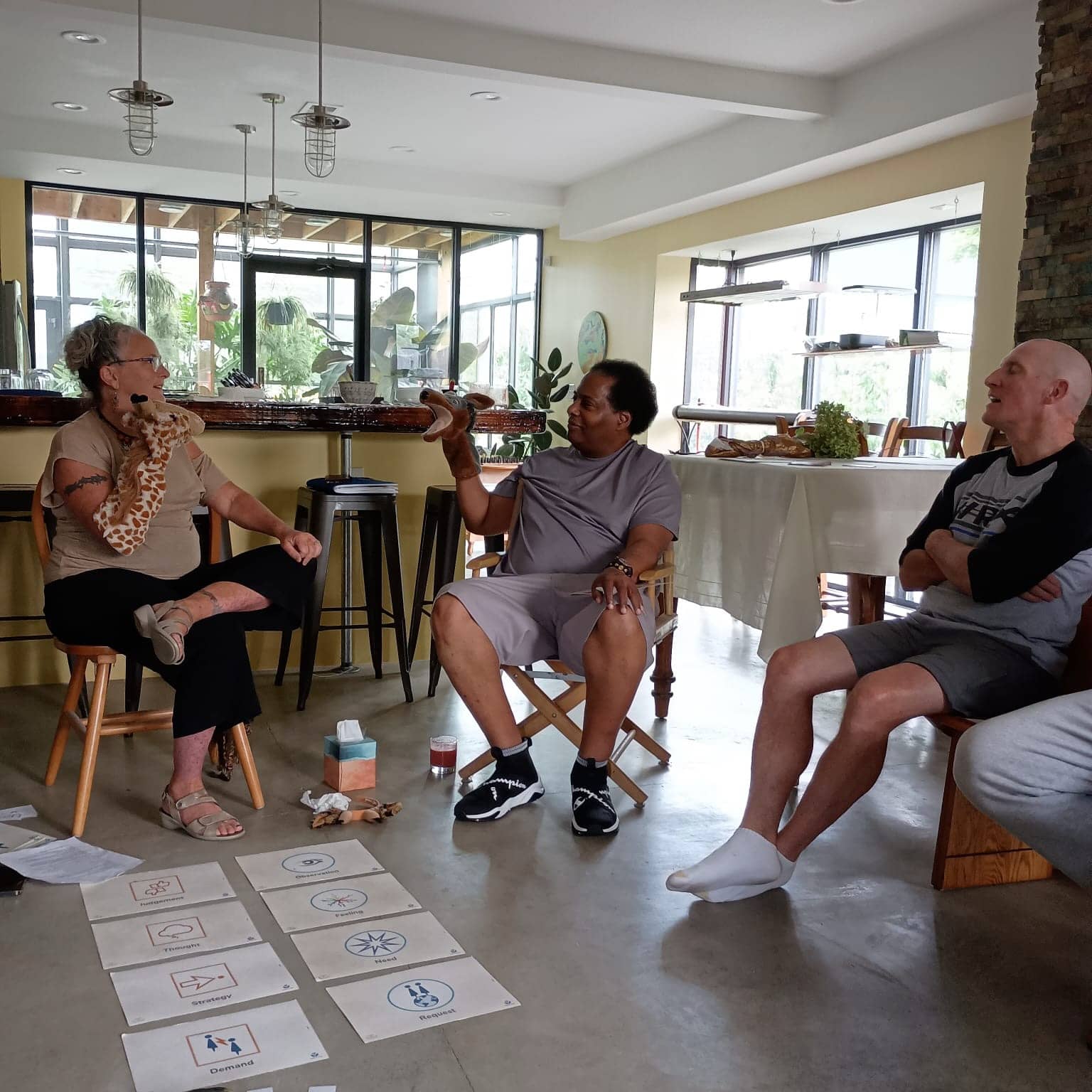
We sometimes call appreciation giraffe juice, and I love that image. Hearing how we have contributed to someone else, what they value in us, what they have received from knowing us — it is like drinking a juicy nectar. And saying these things out loud can bring a depth of connection that might otherwise never happen.
Then my son told me that I, Cordelia, got a lot of compliments from the group for raising such a great person.
I said to him, “I have as much a sense that you raised me…”
And we had a lovely sharing about that.
Because I really do experience it that way. Yes, I raised my children. And they raised me too. I have learned so much through being their mom, and so much of who I am today developed through my relationship with them. Our children can be some of our greatest teachers.
Then he said something else that stayed with me.
He said that one of the things he appreciated about how I raised him was that I didn't tell him how to do everything. I did things myself, and that gave him the space to figure out what he wanted to take from it.
He gave healthy food as an example. He learned to enjoy good-quality, healthy food not because I told him he should eat that way, but because he saw me doing it and enjoying it himself.
Modelling.
And then he said, “I think I use NVC so much more than I realise.”
Which I see and notice a lot with both my kids.
And perhaps they learned that in a similar way. Not because I taught them that this is how you should communicate, but because NVC was something they lived around and experienced. They saw me practising it, struggling with it, coming back to it, and trying to live it.
There is something in that which really touches me, as it so aligns with how I want to live.
As parents — and perhaps as teachers and trainers too — we can put so much energy into what we want to teach. Yet maybe some of the deepest learning happens through what we live and model, while giving another person the freedom to find their own relationship with it.
And then, somewhere along the way, we discover that while we thought we were raising them, they were raising us too.
I'm still riding the wave of that conversation.
Frequently asked questions
What is giraffe juice in NVC?
Giraffe juice is a playful name for appreciation. The giraffe is a symbol of NVC because it has a big heart. Giving giraffe juice means telling someone how they contributed to your life.
How do you give an appreciation in NVC?
Say what the person did, which need of yours it met and how you feel. This is more specific and more nourishing than general praise.
Do children learn NVC from their parents?
Children learn a great deal from what they see us live, including how we handle feelings, struggle and begin again. Modelling often teaches more than telling.