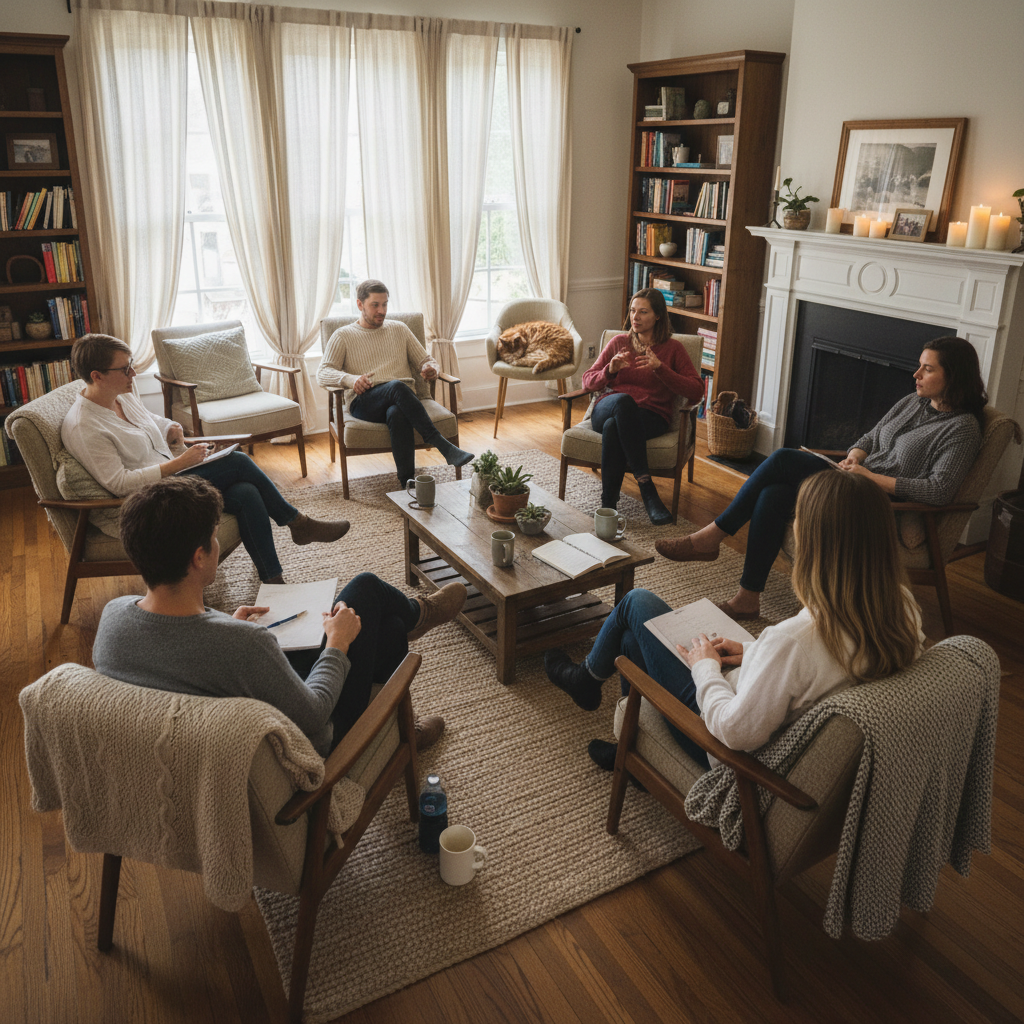
One thing I value deeply in my courses is creating a learning space where people have plenty of opportunity to participate, practise, ask questions, bring in their own experiences, and get to know one another. This is one of the reasons I keep my groups small, with a maximum of twelve participants.
Why does group size matter?
There is, of course, a lot we can learn about NVC through reading, watching videos, and listening to others. And something different happens when we practise it ourselves.
We get to try out words and discover how they sound when we actually say them. We can bring in a situation from our own lives and explore what is happening. We can practise listening to someone with empathy, notice where we get stuck, ask questions, try again, and learn from what others bring.
With a maximum of twelve people, there is space for this. Sometimes we work all together, sometimes in pairs or small groups, and sometimes one person's real-life situation becomes a learning opportunity for everyone.
Learning from each other
I find that much of the learning in a course comes not only from what I teach, but from what happens between the people in the group. We hear different perspectives and experiences, practise together, and often recognise something of ourselves in what someone else brings.
I often hear from participants how much they value the sense of safety and community that develops in the group. This matters to me. Trying out a new way of speaking, sharing something from our lives, or practising empathy can sometimes feel vulnerable, and I want there to be space for people to participate at their own pace.
Practising between sessions
Between sessions, I also encourage participants to practise with a buddy from the course. You might meet or call each other and spend some time practising what we have been learning, for example, taking turns listening to each other with empathy.
Participants often share with me how much they get from these buddy practices. It gives them a chance to practise between sessions, to bring NVC into situations from their own lives, and to experience both giving and receiving empathy. For some, the connection that develops with their buddy becomes an important part of the course experience too.
Continuing together
One of the things I particularly enjoy is seeing people continue from one course to another. Participants who meet in a Foundation Course may find themselves together again in Level 2 and later Level 3. New people join, others take a break and return, and over time something of a learning community can begin to grow.
For me, this is part of learning NVC too: not only learning the principles and processes, but having people to practise with, learn from, and share the journey with.
Frequently asked questions
How many people are in your NVC groups?
At most twelve participants. This keeps the group personal, so everyone can practise, ask questions and be seen.
Why is a small group better for learning NVC?
NVC is learned by practising, like a language. In a small group everyone has time to practise, and the sense of safety makes it easier to try new ways of speaking and listening.
What is buddy practice in NVC?
A buddy is another participant you practise with between sessions, for example by taking turns to offer empathy. It helps the learning continue in daily life.
.jpeg)
.jpg)