Our relationships with children can bring us enormous joy, love and connection, as well as moments of frustration, worry and helplessness. We may have clear ideas about the kind of parent, teacher or caregiver we want to be, yet find ourselves reacting in ways that don't reflect those values.
Nonviolent Communication (NVC) offers us a way to understand what's happening within ourselves and the children in our lives. It helps us recognise the feelings and needs behind behaviour, navigate conflict with care for everyone's needs, and build relationships based on mutual respect, trust and connection.
And perhaps most importantly, children learn so much from how we live and relate to one another. When we bring NVC into our everyday interactions, we offer them an experience of empathy, honesty and consideration for everyone's needs.
This is something close to my heart, both as a mother and through my many years of working with children and young people. It's also what inspired me to offer Living NVC with Children, a course for anyone who wants to bring Nonviolent Communication more fully into their relationships with children and young people.
Whether you're a parent, grandparent, teacher, or working in childcare, education or healthcare, this course offers space to explore how we can live NVC in these relationships.
Children of all ages are part of our lives, from toddlers and teenagers to adult sons and daughters. The course welcomes parents of children of any age, including parents-to-be, as well as anyone who spends meaningful time with children and young people.
What moves me to offer this course?
I was once a single mom with two young boys, which is when I met NVC in 2010. I held parenting values that were very dear to me: that my children felt seen and heard in their feelings and experiences, and that they could exercise their autonomy while feeling safe and supported. And yet, I often found myself overwhelmed and speaking and behaving in ways that didn’t align with those values.
NVC taught me, first and foremost, to connect with myself—to see and hear myself. From that inner clarity and space, I learned to meet my children with more presence and to approach conflict through empathy and mediation.
My two sons are now young, thriving adults, alongside my two adult bonus sons. There was a time we lived together as a blended family of six, with four teenage boys in the house, and I am deeply grateful I was practicing NVC by then!
In 2015, I founded a democratic school where, for a time, all four boys attended. Over ten years, I mentored, taught, mediated, played with, did sports with, and spent informal time with hundreds of children and young people, ages four to twenty. This included facilitating sociocratic circles, as well as using The No-Fault Zone Game to offer weekly empathy and mediation between students, between students and teachers, and among teachers themselves.
Living NVC with Children — the course
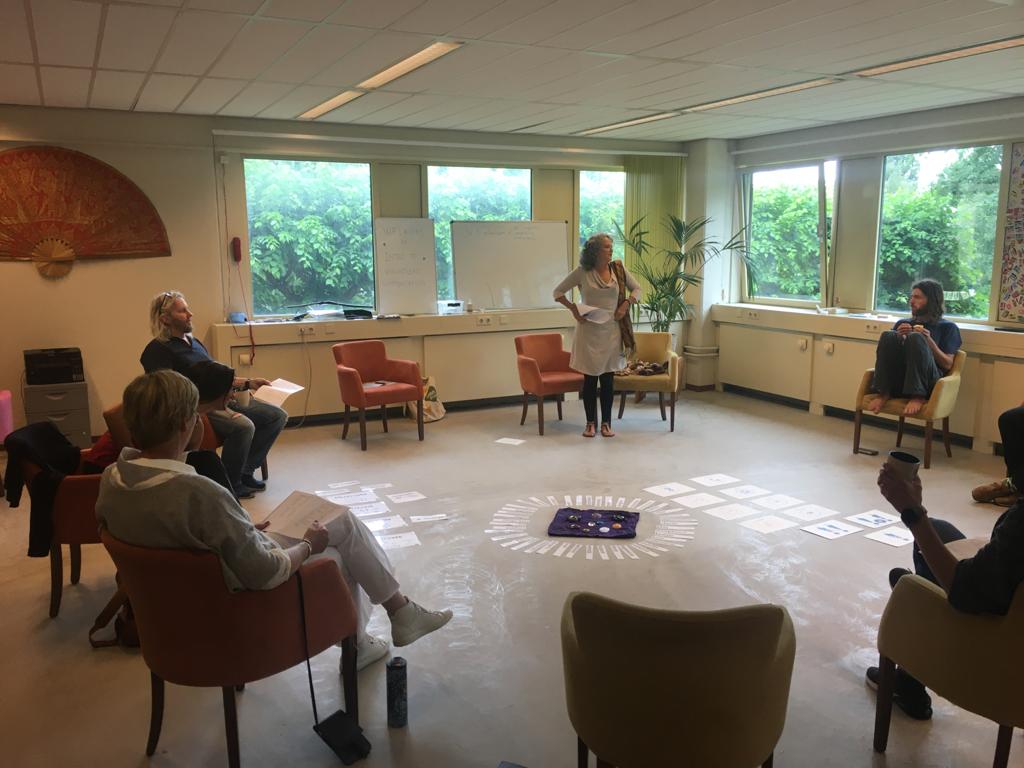
Living NVC with Children is an invitation to learn from that lived experience, and to support you in building connection, clarity, and trust in your own relationships with young people.
It's an intermediate-level course for those who already have a foundation in Nonviolent Communication.
At the heart of this course is modelling NVC as a way of being. Living NVC with children means seeing all our humanity, beyond labels and roles like "parent", "child" and "teacher", and finding ways to bring ourselves in fully while honouring the experience of the other.
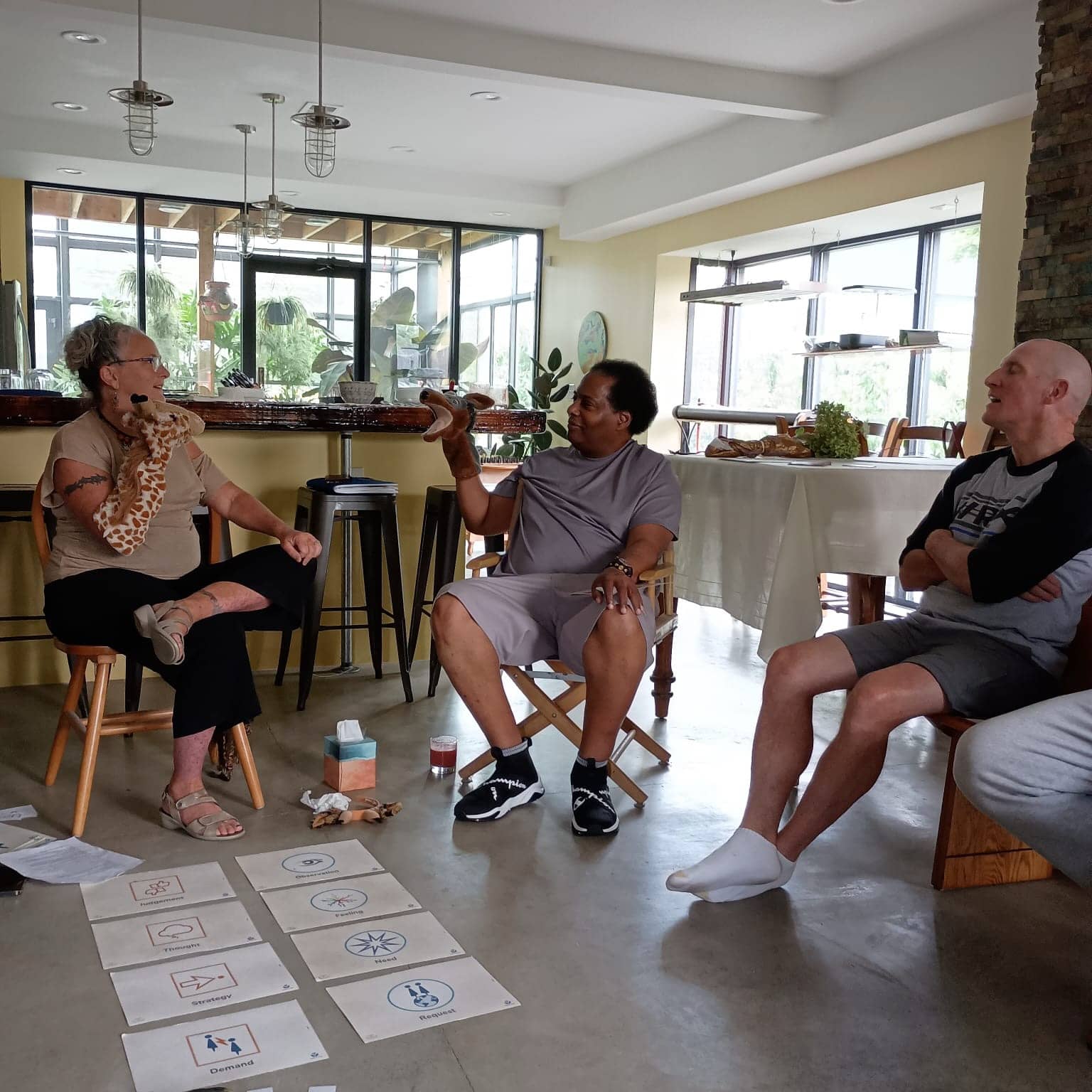
Over eight sessions, we explore staying connected to ourselves under stress, hearing the needs behind behaviour we find challenging, expressing ourselves honestly without blame, and moving beyond punishment and reward. We look at guilt and shame, conflict, resistance and autonomy, appreciation instead of praise, and how to stay connected during difficult conversations with other adults involved in a child’s life.
The course is practical and rooted in real life, with space to bring your own situations and explore them together through empathy, reflection and practice.
My hope is that what you learn in the course finds its way into your everyday moments with the children in your lives.