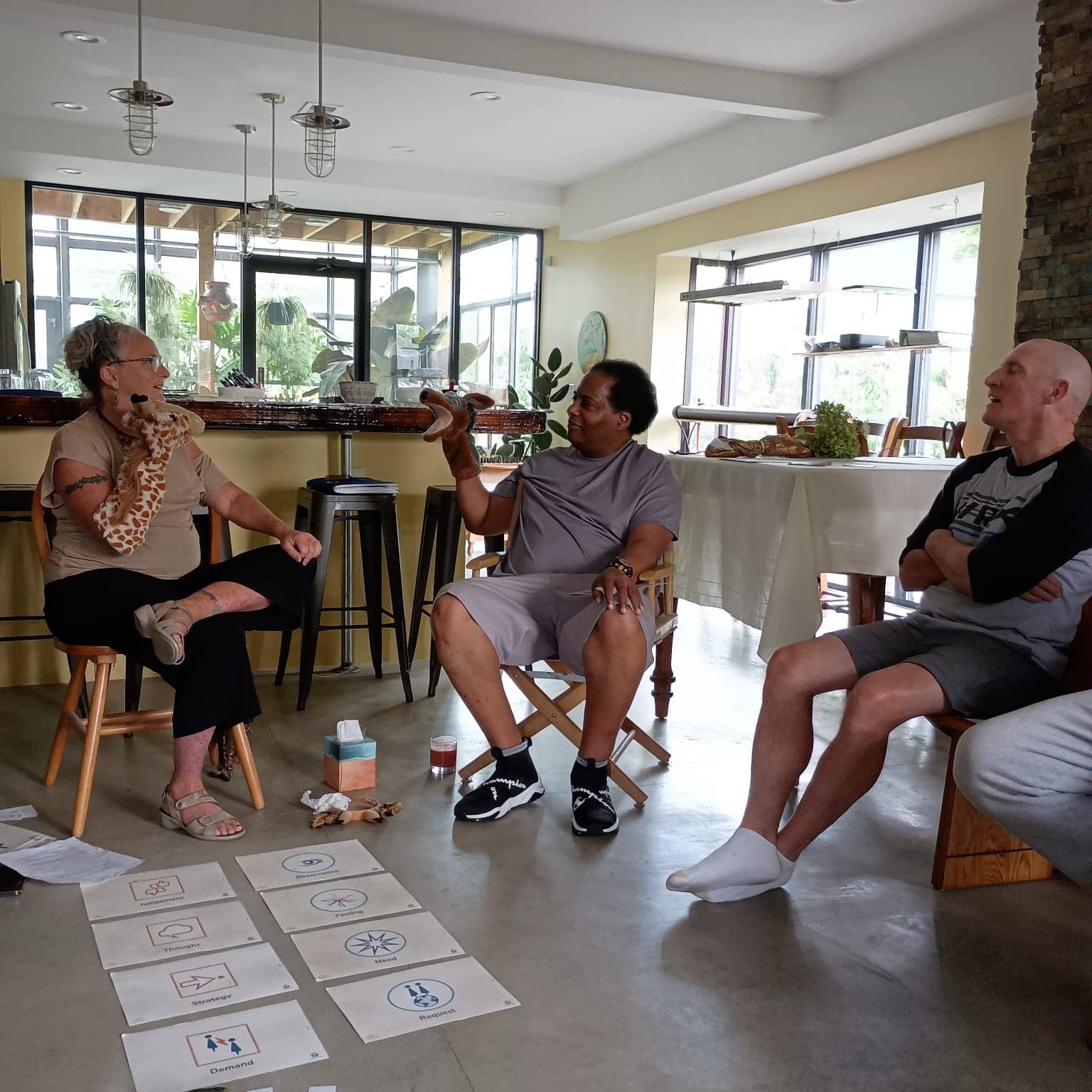
When we're in conflict, we often focus on what we want the other person to do, or what we want them to stop doing.
Imagine two neighbours disagreeing about a shared garden fence. One wants it replaced immediately, while the other doesn't want to contribute to the cost.
They might spend a long time arguing about who should pay, who is responsible, or whose idea makes the most sense.
But what happens when we become curious about why each person wants what they want?
Perhaps one neighbour is concerned about privacy and the safety of their young child. The other is worried about money and wants financial security.
In Nonviolent Communication (NVC), we try to understand the needs underneath what people are saying and asking for. Once both people begin to hear what really matters to the other, there is often more willingness to explore different possibilities.
And this is something I find so valuable about NVC. Even when people strongly disagree about what should happen, they can often recognise and understand each other's needs. From there, they can begin looking for ways to care for everyone's needs.
How does NVC help when people want to be heard?
When we're in conflict, we often want the other person to understand our side. And when both people are trying to explain themselves, it can be difficult to really listen to each other.
One way to change this is to make a conscious choice to listen first, even when we have a strong desire to be heard ourselves.
Listening with empathy means trying to understand the feelings and needs behind what someone is saying. We don't have to agree with their opinions or actions to understand what matters to them. You can read more about this in our article on empathy in NVC.
When someone experiences being heard and understood, they may become more willing to listen to us too. This creates an opportunity to express our own feelings and needs honestly, and to begin exploring ways forward together.
What if you're too upset to listen?
Of course, listening with empathy isn't always easy, especially when we're angry, hurt or frightened.
Sometimes we're so caught up in our own feelings and judgments about the other person that we simply don't have the capacity to listen.
This is where self-empathy can help. Before trying to understand someone else, we can take some time to connect with ourselves. What am I feeling? What am I telling myself about this person? And what needs of mine are not being met?
Imagine a mother who regularly argues with her teenage son about his phone use. She's frustrated and worried, and finds herself saying things like, "You never listen to me!"
If she takes some time to connect with herself, she might recognise how much she values cooperation, trust and care for her son's well-being.
She may then be able to express what's happening for her without blaming him. And perhaps she can also become curious about what's important to him. Is he wanting more autonomy, relaxation or connection with his friends?
Understanding each other's needs doesn't mean the disagreement disappears. But it can open up a conversation in which both people have a better chance of being heard.
How does NVC mediation work?
Sometimes a conflict has been going on for so long, or there is so much hurt and frustration, that it's difficult to find a way forward without support.
As an NVC mediator, I help people hear and understand each other, especially when they are struggling to do this on their own.
I don't take sides or decide who is right or wrong. My focus is on understanding the feelings and needs of everyone involved and helping people find ways to move forward together.
I usually begin with a separate conversation with each person. This gives everyone an opportunity to share what's happening for them, express their concerns and explore the needs behind their reactions.
When we come together, I support each person in expressing themselves honestly and help the other person hear what's important to them.
Sometimes this means interrupting when judgments, blame or accusations make it difficult for the other person to listen. I help translate what's being said into feelings and needs, or check whether someone has really understood what the other person is trying to express.
I also pay attention to whether both people have enough safety and space to participate freely in the conversation.
Once there is enough mutual understanding, we can begin looking at possible agreements and ways to meet everyone's needs.
Every mediation is different. Some conflicts can be worked through in one meeting, while others need more time.
If you're experiencing a conflict with your partner, a family member, a friend or a colleague, you can read about individual and duo sessions.
Would you like to explore NVC further?
Learning to work with conflict takes practice, especially when strong emotions are involved. In my NVC courses, we explore how to listen with empathy, express ourselves honestly and work through difficult situations. In Level 3A we also practise NVC mediation and work with conflicts from our own lives.
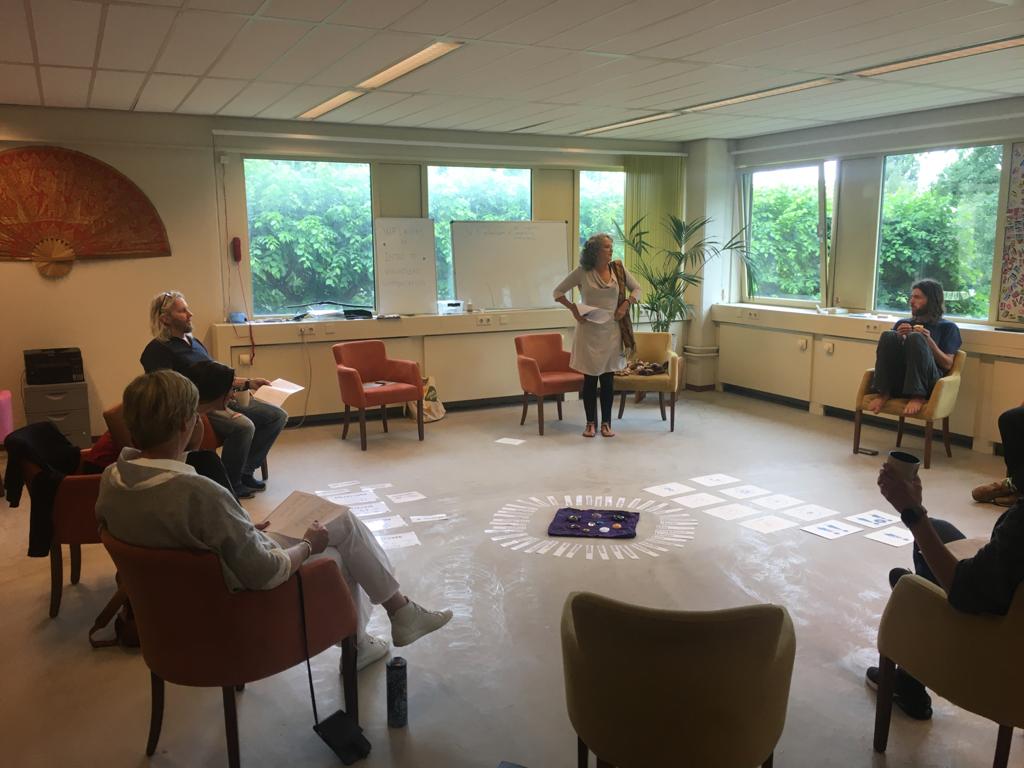
At the Heart in Community retreat in the Dordogne, there will be opportunities to practise these skills together and experience how NVC can support our relationships and everyday interactions.
And if you're currently experiencing a conflict and would like some individual support or mediation, you're welcome to contact me to explore what's possible.
Frequently asked questions
Can nonviolent communication resolve conflict?
It can help people understand each other and find solutions that work for both, but it does not guarantee agreement. Some conflicts involve needs that cannot all be met. NVC aims for a respectful process, not a perfect outcome.
What is the NVC mediation process?
In general, each person is heard until they feel understood, the needs behind each position are named, and then both look for practical options. On Cordelia's site, mediation starts with a separate conversation with each person, followed by a joint conversation.
When should you not use NVC in a conflict?
Be careful when there is violence or threat, a large power difference, or trauma. In those situations safety and professional support come first. NVC cannot be forced on someone who does not want to take part.
What is the difference between a position and a need?
A position is what you demand, such as 'you must replace the fence'. A need is the reason underneath, such as privacy or safety. Positions often collide, while needs can usually be met in more than one way.
.jpeg)