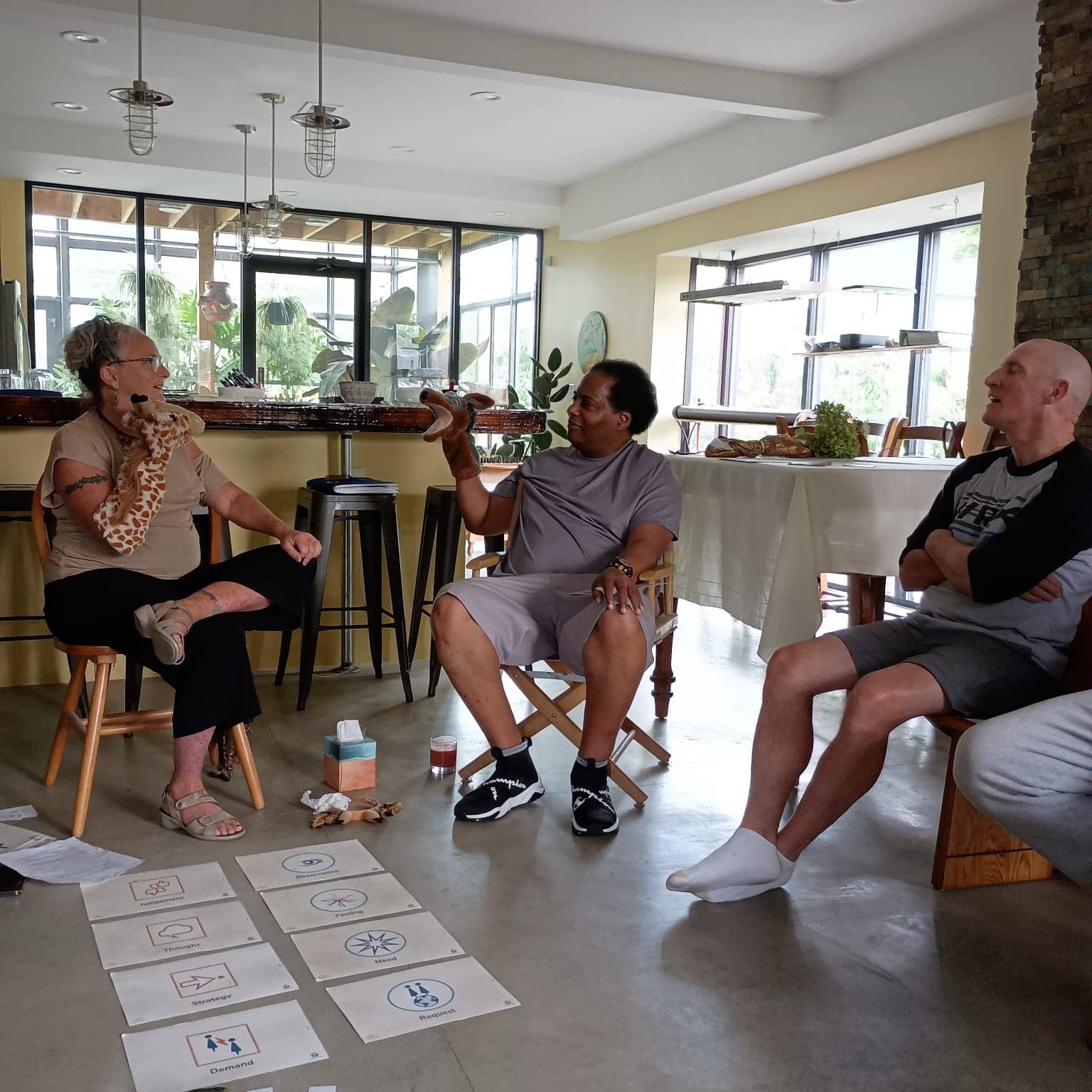
Someone in a recent Foundation Course brought in a situation with a family member who had been staying in her home for a visit.
After a few days, tension was building. Her guest wasn’t keeping things as neat as she would have liked, sometimes came home late when she was already in bed, and had brought someone she didn’t know into the house.
She was getting increasingly irritated. Thoughts were going through her head like: You should know how to behave when you’re staying in someone else’s home. You’re being inconsiderate. You don’t seem to care how this affects me.
At the same time, she cared about this person and about their relationship. She wanted to speak honestly about what was happening for her, while also holding care for how her words might land. So how could she say what was really going on for her without either swallowing it or throwing all those judgments at them?
This is something we practise a lot in NVC: finding the words to speak from the heart, with both honesty and care.
Together, we explored what she really wanted this person to understand. She wanted to be able to relax in her own home. She wanted consideration around coming home late when she was already sleeping. And having someone she didn’t know brought into her house without checking with her affected her sense of ease and safety.
As she connected more with what mattered to her, the words began to change. She didn’t need to tell her family member that they were inconsiderate or disrespectful. And she also didn’t need to pretend that everything was fine.
She could say, in her own words, something like: “I really enjoy having you here, and I also notice I’m getting quite tense. When I wake up when you come home late, or someone I don’t know comes into the house without me knowing beforehand, I find it hard to relax. I’d really like us to talk about how we can make the rest of your stay work for both of us.”
What I loved was that she could say what mattered to her clearly while still holding care for the other person and the relationship.
Perhaps you recognise this in your own life: having something you really want to say, while also wanting to care for the connection between you. The next time you find yourself there, try starting with I instead of you. Notice the difference between “You are being inconsiderate” and “I feel tense because I really value consideration and ease in my home.”
See if you can speak about what is happening in you: I feel… because I need/value… rather than telling the other person what you think they are doing wrong. It can open the door to a very different conversation.
Frequently asked questions
How do I tell someone something difficult without starting a fight?
Slow down first. Separate what happened from your story about it, find the feeling and need underneath, and then share what is alive in you. Inviting contact works better than telling the other person what to change.
What are the four steps of NVC?
They are observation, feeling, need and request. Together they help you describe a situation without judging it, say how you are and what matters to you, and ask for something specific.
What if I am too upset to find the words?
Give yourself empathy first. Naming your own feelings and needs often calms things enough to find honest words afterwards.
.jpeg)