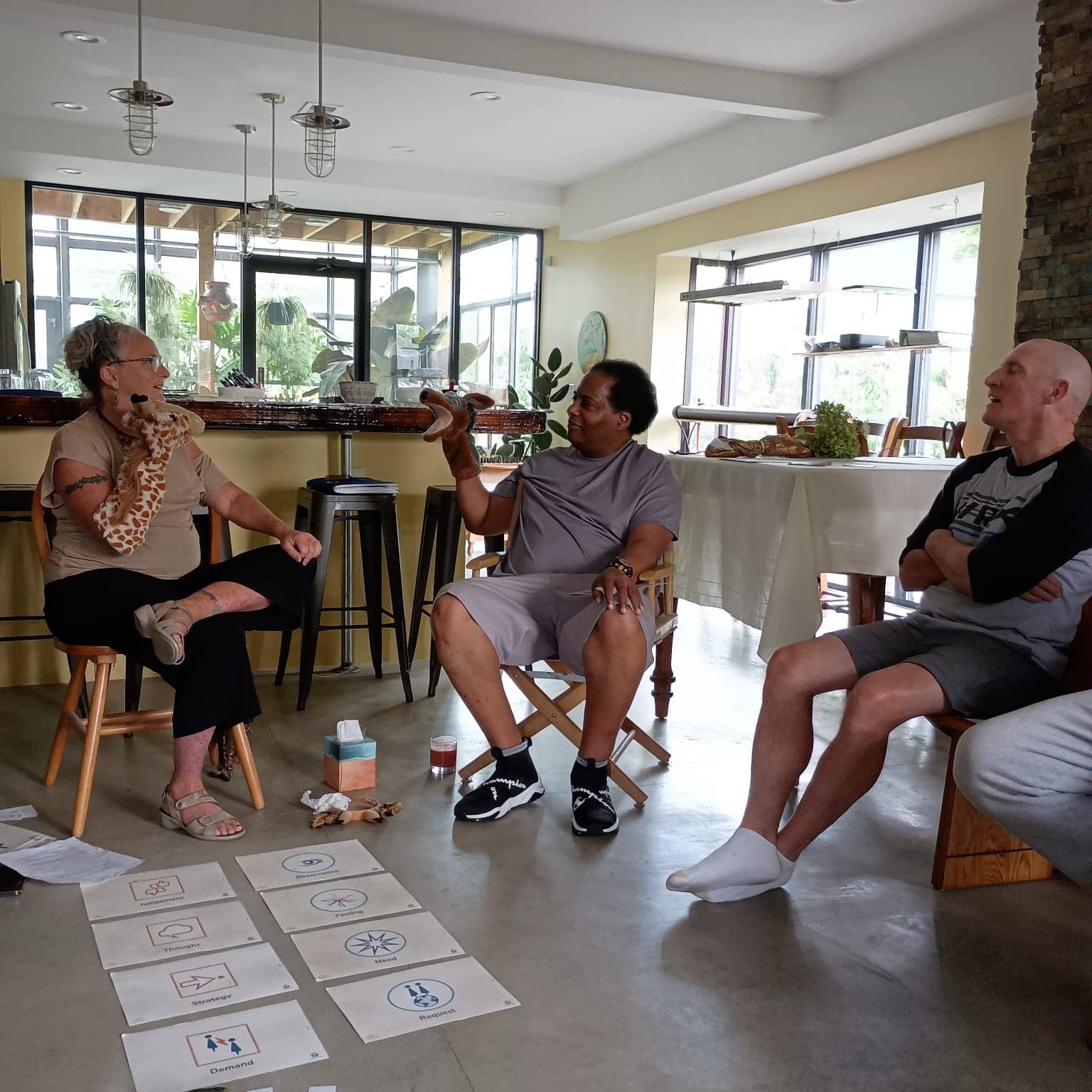
It is Sunday evening and you feel a little restless. You scroll your phone, open the fridge, close it again, and snap at the first person who asks what is wrong. You cannot say what you want, only that something is missing. In Nonviolent Communication (NVC), that something often has a name: an unmet need.
What are needs in NVC?
Needs are the things all of us care about as human beings, like connection, rest, safety, meaning and freedom. They are the reason behind what we feel and what we do.
When you feel content, a need is probably being met. When you feel restless, tense or sad, a need may be asking for attention. Learning to hear that message is a big part of the language of NVC, and a bit like learning a new language, it gets easier with every step.
What is the difference between a need and a strategy?
A need is universal and has no particular person, place or time attached to it. A strategy is a specific way of meeting a need: a certain action, by a certain person, at a certain moment.
Take the Sunday evening again. "I need you to call me tonight" is a strategy. Underneath it might be a need for connection or for reassurance. Many different strategies could meet that need: a call, a message, a walk together, a quiet moment with yourself. When we know the need, we have more choices, and so does the other person.
Which needs do we all share?
Everyone has the same needs, though they show up with different strength on different days. A few needs that people often recognize:
- Connection, belonging and closeness
- Rest, ease and space to breathe
- Autonomy, the freedom to choose for yourself
- Recognition, appreciation and the feeling of mattering
- Safety, trust and clarity
- Meaning, contribution and play
Because needs are shared, they build a bridge. You may not agree with someone about the dishes, the budget or the holiday plans, but you can both understand what it is to want rest or to want to be seen.
How do you find your own need?
Start with the feeling. A feeling is like a messenger, and the need is the message. Ask yourself: what am I feeling right now, and what would I love more of in my life at this moment?
If you feel tense before a family visit, you might discover a need for ease or for acceptance. If you feel a glow after a friend listened to you, perhaps a need for understanding was met. You can read more about telling feelings apart from thoughts in our article on feelings vs thoughts in NVC, which is a good companion to this one.
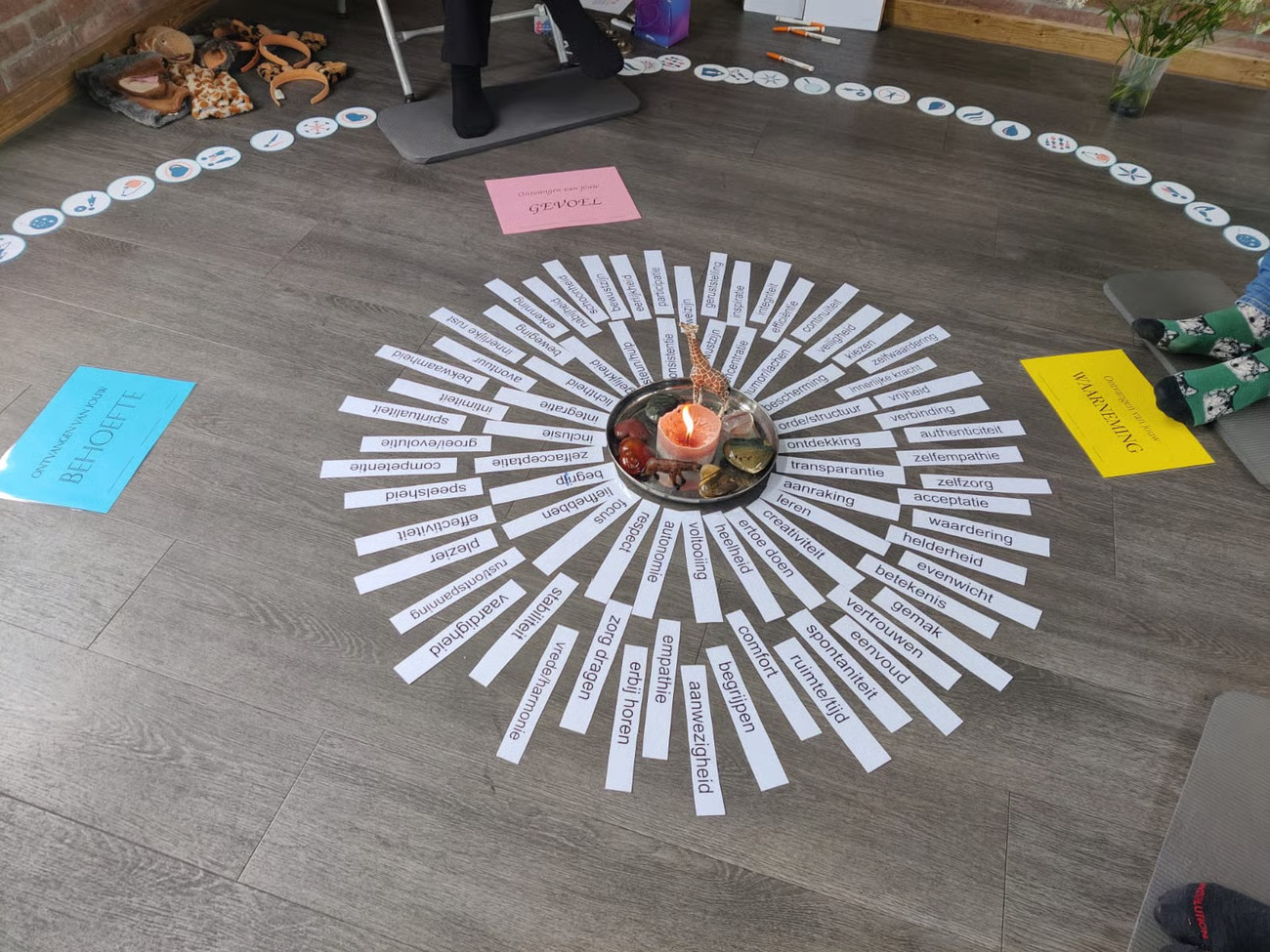
Finding a need is also a gentle form of self-empathy in NVC. You are simply listening to yourself with warmth and curiosity. If a word does not fit, try another one until your body says yes. The Center for Nonviolent Communication offers a list of feelings and needs that can give you inspiration.
Where do needs fit in the four steps?
Needs are the third of the four steps of NVC: we observe, name what we feel, connect with the need behind the feeling, and then make a clear request. The need is the heart of the process, because it moves a conversation from who is right to what matters to each of us.
Needs are just as useful when you listen to someone else. Guessing at the need behind another person's words, quietly or out loud, is a lovely way to offer empathy in NVC. People often relax when they feel that what truly matters to them has been heard.
What is a short exercise for this week?
Once a day, pause for one minute and finish these three sentences, in your head or on paper. "Right now I feel..." "Because I would love some..." "One way I could care for that is..."
Keep the need to a single word if you can, such as rest, connection or autonomy. You may notice that the same needs return in different disguises, and that you slowly build your own vocabulary for what matters to you. There is no right answer, only your honest one.
If you would like to practice with others, we explore needs together in the Level 1 Foundation course. You are also very welcome to begin with the free two hour intro workshop, or visit Start here for a warm first overview.
Frequently asked questions
What are needs in NVC?
Needs are the universal life qualities all people care about, like connection, rest, safety, meaning and freedom. In NVC they are the reason behind our feelings and actions, and naming them helps us understand ourselves and others.
What is the difference between a need and a strategy?
A need is universal, with no person, place or time attached. A strategy is a specific way to meet a need, such as asking someone to call tonight. One need can be met by many different strategies.
How do I find my need?
Start with what you feel, then ask what you would love more of right now. Try a single word such as rest, connection or autonomy, and adjust until it fits. It is a form of self-empathy.
Where can I find a list of needs?
The Center for Nonviolent Communication offers a list of feelings and needs on its website. Use it as inspiration to find words that fit you. In the Level 1 Foundation course we practice with such words together.
.jpeg)