You open an email from a colleague and your jaw tightens. Or your child refuses to put on their shoes for the fifth time, and you're already late. Or you're still upset about something your partner said last week, and you find yourself going over the conversation again and again.
In moments like these, our minds can become very busy. We blame, judge, criticise, defend ourselves or imagine what we would like to say to the other person.
Nonviolent Communication (NVC) offers a way to listen to what's happening inside us, with curiosity and compassion. We call this self-empathy.
What is self-empathy in NVC?
Self-empathy means offering ourselves the same understanding and compassionate attention that we might offer someone else.
It involves becoming aware of our thoughts, judgments, feelings and needs, and making space for whatever is alive in us.
Sometimes we can connect with our feelings and needs quite easily. At other times, especially when we're angry or hurt, all we can hear are judgments about ourselves or other people.
And that's a perfectly good place to begin.
Step 1: Let your jackals out!
In NVC, we sometimes use the jackal as a symbol for the part of us that judges, blames, criticises and makes demands.
Imagine receiving an email from your manager asking you to redo a report by tomorrow. Your first thoughts might be:
“Unbelievable! She has no idea how much work I've already put into this. She's so demanding. Why can't she appreciate anything I do? I'm sick of being treated like this!”
Rather than trying to replace these thoughts with more compassionate ones, give yourself permission to hear them.
You might speak them aloud when you're alone, write them down or share them with someone who can listen without judging you.
The important thing is that we don't direct these jackals at the person we're upset with. We give them space in order to understand ourselves, without causing further pain or conflict.
In NVC, we recognise that our judgments are stories and interpretations, not the truth about another person. What is true for us is what we are feeling and needing underneath those judgments.
There's a beautiful idea in NVC that every judgment is a tragic expression of an unmet need.
Behind our blame, criticism and demands, there is something precious to us that we are longing for.
Our jackals can help us discover what that is. We can listen to them, without believing their stories, and begin to uncover the feelings and needs they are trying to express.
Step 2: Discover the feelings and needs underneath
Once you've given your jackals some space, you can begin to unpack what they're telling you.
Take the thought: “She never appreciates anything I do!”
What might you be feeling?
Perhaps you're frustrated, hurt, discouraged or exhausted.
And what is important to you underneath those feelings?
Perhaps you're longing for appreciation, recognition, consideration or support.
Or take another judgment: “He is so selfish! He only thinks about himself!”
Underneath that thought, you might discover sadness, loneliness or anger, because you would love more mutuality, care or consideration.
Each judgment offers an opportunity to discover something about ourselves.
As we connect with our feelings and needs, something often begins to shift. We may experience relief, sadness, tenderness or a deeper understanding of why the situation matters so much to us.
Step 3: Do I want to do anything about this?
Once you've connected with your feelings and needs, you may find that you already feel more settled. Perhaps being heard, even by yourself, was what you needed most.
Or you may want to take some action.
Returning to the email from your manager, you might decide to ask for clarification about what needs changing, explain your workload or request more time.
You might realise that you're exhausted and want to take a break before responding.
Or perhaps you want to have a conversation about appreciation and how you work together.
Sometimes, after connecting with our needs, we discover that we don't want to do anything at all.
Self-empathy gives us more freedom to choose what we do next, rather than reacting automatically from anger, fear or frustration.
What if I can't get past my judgments?
Sometimes our jackals are very loud. We keep returning to the same story, replaying what happened or thinking about everything the other person did wrong.
This can be especially difficult when something touches an old hurt or when we've been longing for a particular need to be met for a long time.
You may need more time to express what's happening inside you. Or it may help to have someone else offer you empathy, listening to your judgments while helping you discover the feelings and needs underneath them.
And sometimes our judgments are directed at ourselves:
“I should have known better. I'm such an idiot. Why do I always mess things up?”
These jackals deserve our compassionate attention too.
What were you longing for? What needs were you trying to meet? What matters so much to you that you're feeling this upset with yourself?
Self-empathy includes learning to meet our own mistakes, regrets and limitations with understanding.
Bringing self-empathy into everyday life
Self-empathy can become part of how we relate to ourselves throughout the day. You might take a few minutes after a difficult conversation, write down your jackals before replying to an upsetting message, or notice what's happening inside you when you're becoming impatient with your children.
The more familiar we become with listening to ourselves, the easier it can become to recognise our feelings and needs, even in challenging moments.
And when we have given ourselves some empathy, we may find that we have more space to listen to others as well.
Try it yourself: A three-step self-empathy exercise
Think of a situation that has left you feeling upset, angry or hurt. Find a few minutes to yourself, perhaps with a pen and paper.
1. Let your jackals out!
Give yourself permission to express your judgments, blame and criticism without censoring yourself. What are you telling yourself about the other person or about yourself? What should or shouldn't they have done?
Remember, these are interpretations, not the truth. Express them privately or with someone who can offer empathy, rather than directing them at the person you're upset with.
2. Unpack your jackals
Look at your judgments with curiosity. What are you feeling? What needs or values are underneath these judgments? What are you longing for? Offer yourself compassion.
3. Do I want to do anything about this?
Now that you've connected with your feelings and needs, is there something you'd like to do? Perhaps make a request, have a conversation or find another way to care for your needs.
Or perhaps you don't want to do anything at all. Sometimes being heard and understood, even by ourselves, is enough.
Remember: Self-empathy is a practice, and some days it will be easier than others. You can return to these steps whenever you notice yourself caught up in judgments, blame or self-criticism.
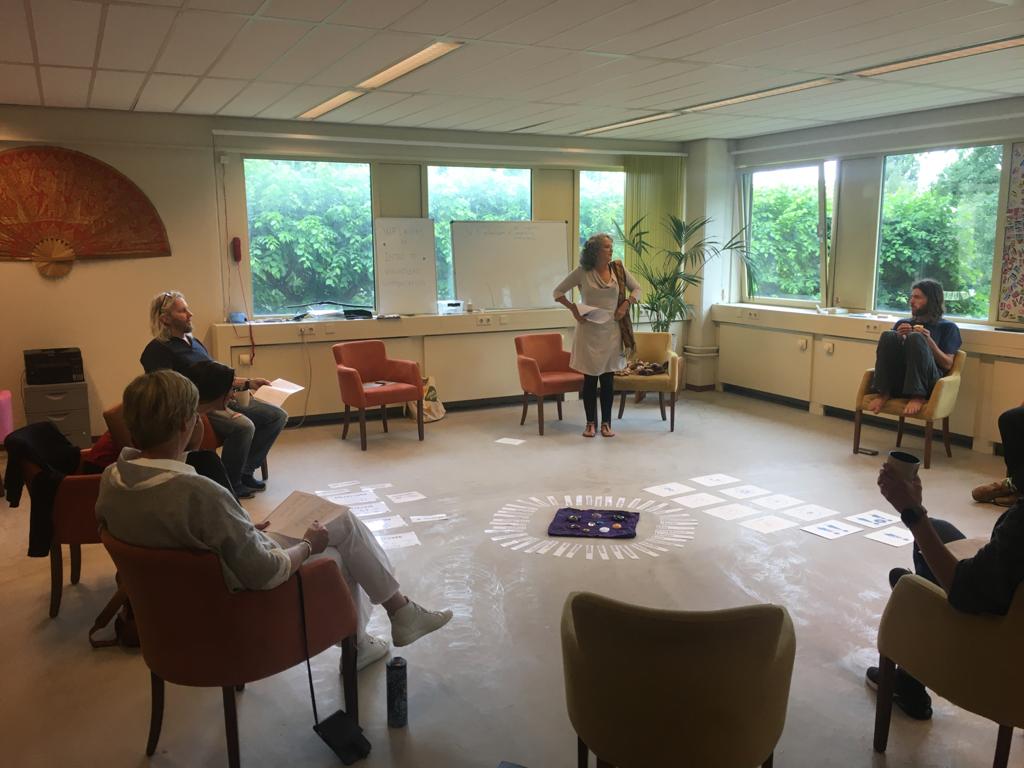
In all my NVC courses we practise self-empathy and explore how to move from judgments and habitual reactions towards a deeper connection with ourselves and others.
.jpeg)