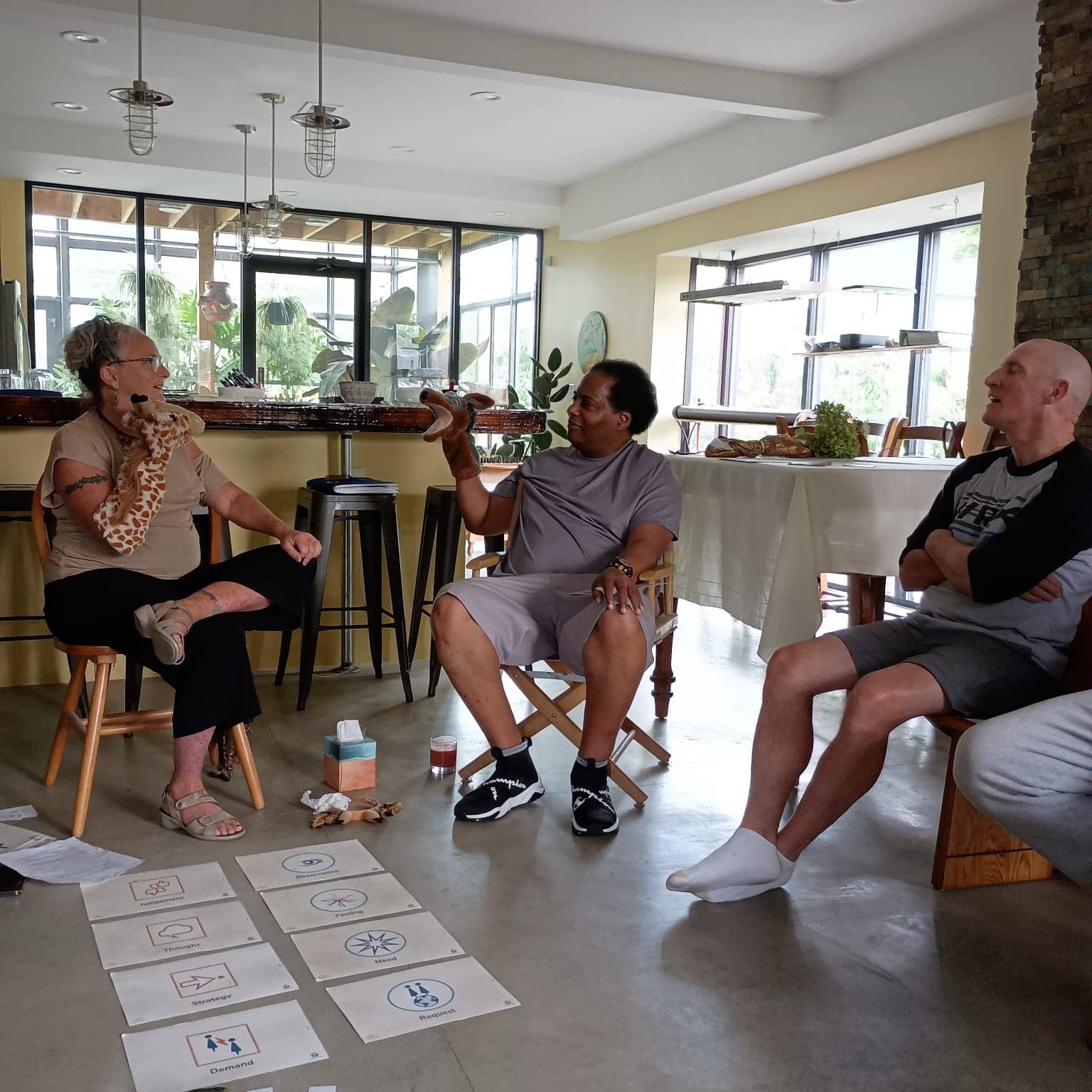
Your partner walks in at eight, dinner is cold, and it is the third time this week. What comes out of your mouth? Many of us either say something sharp that we regret later, or say nothing and quietly carry it around all evening. Nonviolent Communication (NVC) is a language of the heart that offers another way, and Honest Expression with NVC starts with four simple steps.
What are the four steps of nonviolent communication?
The four steps for Honest Expression are observation, feeling, need and request. First, you describe what happened the way a camera would record it, without judgment. Then you notice how you feel. Then you name the need underneath that feeling, something human and universal like rest, respect, trust or connection. Finally you make a concrete request, and you offer it as an invitation, not a demand.
That is the whole map. It sounds simple, and it is, but each step asks us to slow down and do something unusual. Most of the time we jump straight from what happened to who is to blame. NVC adds a few stops on the way, and those stops are often where connection begins.
Marshall Rosenberg developed this approach from the 1960s onwards, and the Center for Nonviolent Communication (CNVC) was founded in 1984. Since then it has been taught in many countries, and you can read more about what NVC is on this site.
What does the judging version sound like?
Back to that cold dinner. The version most of us know by heart goes something like this: "You never think about anyone but yourself. You are so inconsiderate." Notice what is in there. "Never" is a generalization, "inconsiderate" is a label, and the whole sentence likely comes across as an accusation.
It is very human to say this. Underneath the sharp words there is usually something softer: tiredness, disappointment, a wish to matter to someone. But the other person only hears the attack. They defend themselves or attack back, and the real conversation never happens.
What does the NVC version sound like?
Now the same moment in four steps: Observation: "You came home at eight, and this is the third evening this week that dinner was ready at six." There is no "always" in it and no judgment, only something you could check on a clock.
Feeling: "I feel quite tense." Need: "I would like some predictability, in planning dinner." Request: "Would you be willing to send me a message when you know you will be later than six, so I can plan the meal?"
See how the request is concrete, positive and doable. It does not say "be more considerate", which nobody can act on. It also leaves room for a no. If your partner says no, that is not the end of the conversation. It is the start of finding out what they need, which might be that their job makes this challenging at the moment. From there you can look for something that works for both of you.
The same steps work at the office. Imagine a colleague who finishes your sentences in meetings. Instead of "You never let me speak", you might say: "In the last two meetings you answered before I had finished my point. I feel frustrated, because I need space to complete my thoughts and to feel heard. In tomorrow's meeting, could you let me finish before you respond?"
What happens when we use NVC as a formula?
If we memorise the four steps and recite them like a script, it may not come across as naturally as we'd hoped. "You arrived at 8 instead of 6. I feel hurt. I need respect. Can you let me know ahead of time next time?" can sound stiff or rehearsed. People often sense when we're following a technique rather than genuinely trying to connect.
There are a few things worth paying attention to: expressing a judgment as though it were a feeling ("I feel like you don't care"), making a request while still expecting the other person to say yes, or becoming so focused on the four steps that we lose touch with the person we're talking to.
If you're curious about the distinction between feelings and interpretations, you can explore this further in my article Feelings or Thoughts in NVC.
Where can you learn more?
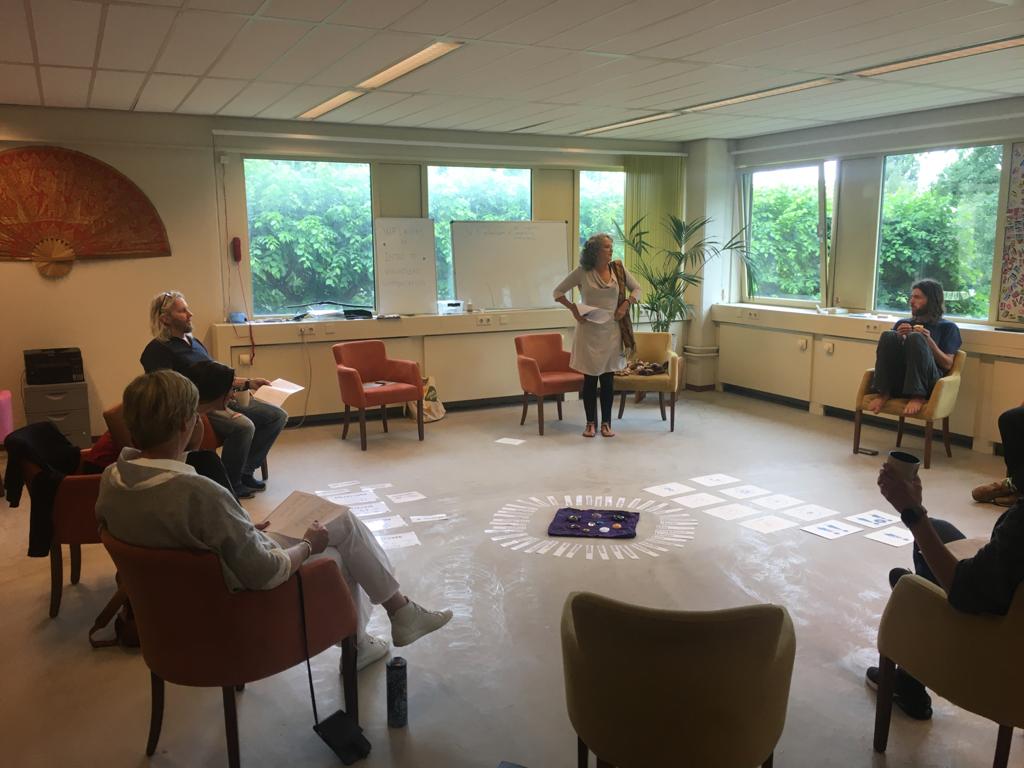
The four steps of NVC may look straightforward, but learning to use them in everyday life takes time and practice. In my Level 1 Foundation course, we explore each step together, with examples, exercises and opportunities to practise with others.
The course consists of eight interactive sessions of three hours on Zoom. If you're curious and would like to experience NVC first, you're also welcome to join my free two hour intro workshop.
Frequently asked questions
What are the 4 steps of nonviolent communication?
Observation, feeling, need and request. You describe what happened without judgment, say how you feel, name the need behind the feeling, and ask for something concrete and doable. The request is an invitation, so the other person can say no.
What is an example of an NVC observation?
"You came home at eight, and this is the third evening this week that dinner was ready at six." An observation is something a camera could record. It has no "always", "never" or label like "inconsiderate" in it.
Is a request in NVC the same as a demand?
No. A request leaves real room for a no. If you would be upset or start to pressure when the answer is no, it was a demand in a friendly voice. A good request is concrete, positive and doable.
Do I have to use the four steps in order every time?
No. The steps are a map, not a script. In daily life you might say only a feeling and a request, or just listen. What matters is the intention to connect, and the steps help you keep your attention there.
.jpeg)