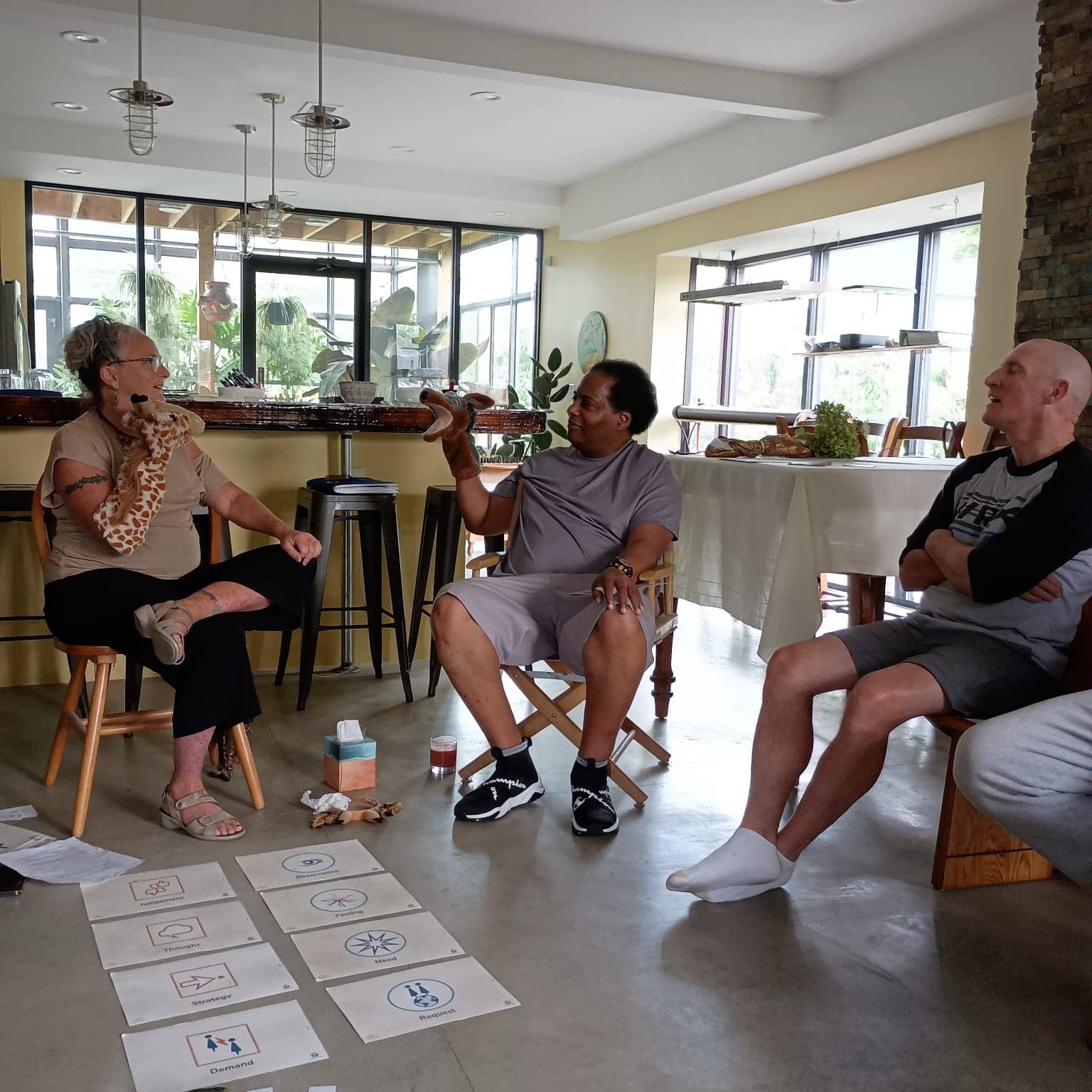
You come home tired and the kitchen is full of dishes again. You say, "Could you please be a bit more considerate?" Your housemate nods, and nothing changes. Or you ask for a favour and feel a flash of irritation when the answer is no. In both cases something small is missing from the request, and it is easier to find than you might think.
What is a request in NVC?
A request in Nonviolent Communication (NVC) is a clear ask for something that would make life a bit better for you, offered to someone who is free to say yes or no. It is the fourth of the four steps of NVC, after we have shared what we notice, what we feel and what we need.
Without a request, the other person is left guessing what to do with everything we just shared. A request gives our words a direction and gives the other person a real chance to contribute.
What is the difference between a request and a demand?
A request invites, a demand expects. The words can be exactly the same. The difference shows in what happens when the answer is no.
With a request, we stay warm and curious about what the other person needs. With a demand, we reach for pressure: a sigh, a reminder of all we have done, a cold silence. Often the other person feels this before we notice it ourselves. A yes to a request is a gift. A yes to a demand is often given out of duty or worry, and it rarely feels like a gift to either of us.
How do you make a request that is clear, concrete and doable now?
Start by asking yourself: what would I like to happen? Then say that, in positive words, as something a person can actually do. Three things help.
- Say what you would like, not what you would like to stop. "Please don't leave your things everywhere" becomes "Would you be willing to hang your coat in the hallway when you come in?"
- Make it concrete. If a camera could film it, it is concrete. "Be more considerate" cannot be filmed. "Could you rinse your plate after dinner?" can.
- Make it doable now. Ask for something possible today, in the next hour or at the next meeting, instead of "always" or "from now on".
It also helps to end with a simple question such as "Would you be willing?" or "How does that sound to you?" That keeps the door open for the other person's own voice.
How can you tell that your request is really a demand?
Notice your body and your thoughts while you wait for the answer. If you feel tense, if you already have a plan for what you will say after a no, or if you hear yourself adding "or else" in your head, the request has probably turned into a demand. Nothing is wrong with you. It simply shows how much this matters to you.
That is a good moment for a little self-empathy: which need is calling so loudly? Once you have heard it yourself, it is easier to ask without pushing.
Then leave room for a no. A no is usually a yes to something else that matters to the other person. When we get curious about that, using a little empathy, the conversation continues, and often a new request appears that works for both of you.
What does a request sound like at home and at work?
At home: "I'm tired and I would love some ease this evening. Would you be willing to load the dishwasher after dinner tonight?" Or with a child: "I need some quiet to finish this call. Would you be willing to play in your room for fifteen minutes?"
At work: "I'd like more clarity about our priorities this week. Would you be willing to meet for ten minutes tomorrow morning and go through the list together?" Notice that each of these names what the speaker needs, asks for one specific action and invites an honest answer.
How can you practice this week?
Choose one moment each day to make a request. Before you speak, ask yourself what you would like to happen, and shape it into something positive, concrete and doable now. Say it, finish with "Would you be willing?", and then notice what happens in your body as you wait for the answer.
Making requests is one of the things we practice together in the Level 1 Foundation course. If you would like to taste it first, you are very welcome at the free two hour intro workshop. And on the Start here page you can see where to begin.
Frequently asked questions
What is a request in NVC?
A request in NVC is a clear ask for something that would make life better for you, offered to someone who is free to say yes or no. It is the fourth of the four steps, after observation, feelings and needs.
What is the difference between a request and a demand?
A request invites and welcomes a no with curiosity. A demand expects a yes and uses pressure, such as guilt, a sigh or silence, when the answer is no. The same words can be either. The difference lies in how we meet the answer.
How do I make a clear request in NVC?
Ask yourself what you would like to happen. Then say it in positive words, as one concrete action that is doable now, for example today or at the next meeting. End with a question such as "Would you be willing?"
How do I know if I am making a demand?
Notice tension while you wait, a plan for what you will say after a no, or an unspoken "or else". These are signs that something important to you is at stake. A little self-empathy first often makes the request softer.
.jpeg)